
A Starry Sky Captured with the α6400—Points and Trails: Two Nights
July 23, 2025. On a clear night, I headed out with my Sony α6400 to photograph the starry sky. There was very little moonlight that night, creating perfect cond
3 min read
July 23, 2025.
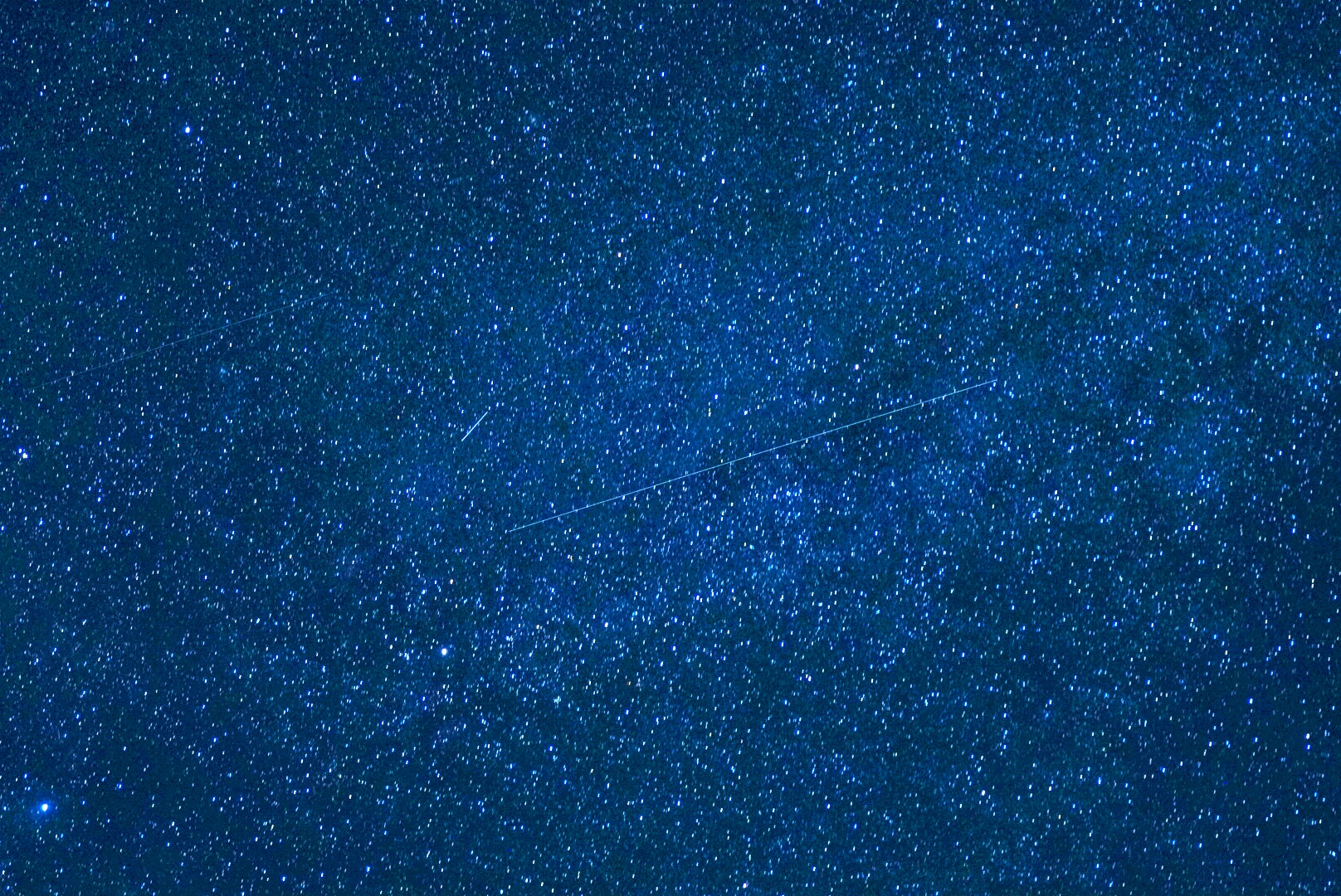
On a clear night, I headed out with my Sony α6400 to photograph the starry sky.
There was very little moonlight that night, creating perfect conditions for the stars to shine clearly.
This time, I tried two different approaches: one to capture “stars as points of light” and another to capture “star trails.”
I’ll carefully document the differences in each shooting method and the settings used.
Capturing Stars as Points — The Beauty of Focus and the Moment
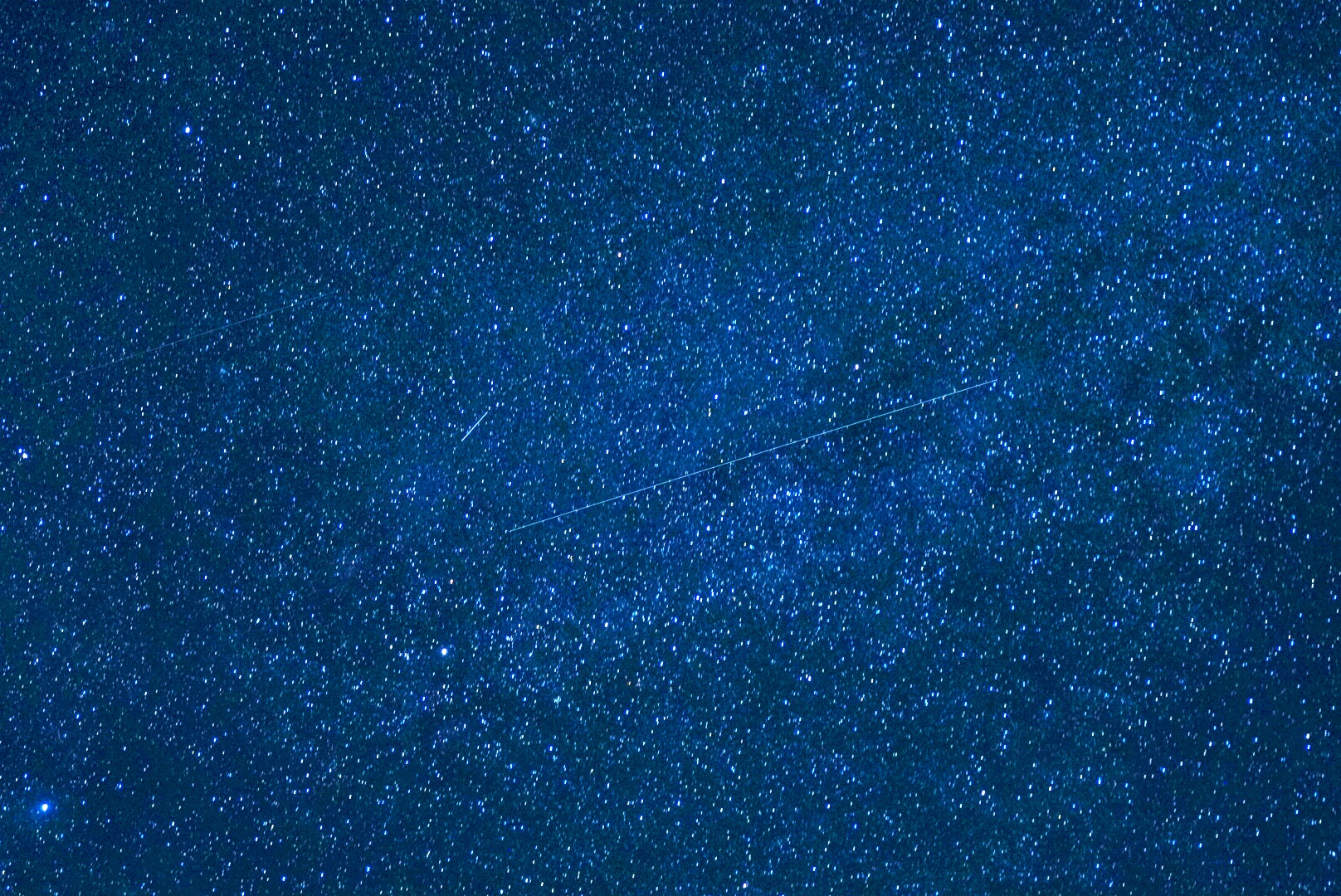
In this photo, I aimed to capture each star clearly as a single point.
I kept the shutter speed to 13 seconds to prevent the stars from appearing as streaks caused by Earth’s rotation.
Shooting Settings:
- Date and Time: July 23, 2025, 9:04 PM
- Camera: Sony α6400
- Lens: Sigma 28-70mm F2.8 DG DN | Contemporary
- Focal Length: 105mm
- Aperture: f/2.8 (wide open)
- Shutter Speed: 13 seconds
- ISO: 1600
- Editing: Snapseed (Clarity, Noise Reduction)
I shot at the telephoto end with the aperture set slightly wide open and used a high ISO to capture the faint light of the stars clearly.
A 13-second exposure at a focal length of 105mm was right on the edge of preventing star trails.
Capturing Star Trails — A Single Shot That Reflects the Passage of Time
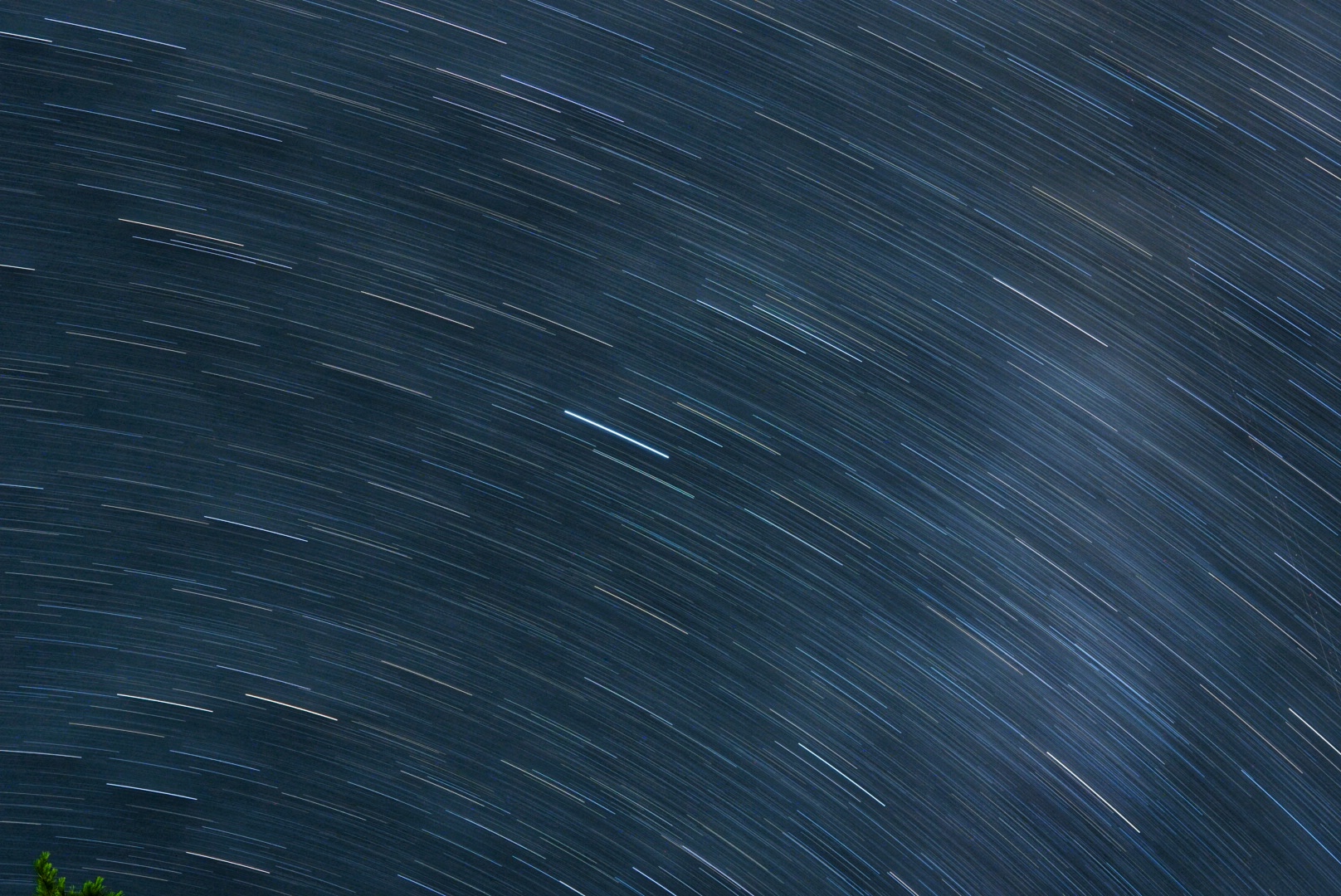
In this photo, long-exposure photography captures the movement of the stars as lines.
The arcs created by the Earth’s rotation evoke a sense of the passage of time itself.
Shooting Settings:
- Date and Time: July 23, 2025, 11:22 PM
- Camera: Sony α6400
- Lens: Sigma 28-70mm F2.8 DG DN | Contemporary
- Focal Length: 42mm
- Aperture: f/5.6
- Shutter Speed: 1227 seconds (approx. 20 minutes)
- ISO: 400
- Editing: Snapseed (brightness and color correction)
By stopping down to f/5.6, I maintained stability across the entire frame and smoothed out the motion in the periphery while keeping noise to a minimum by using a low ISO setting.
What We Can See from the Differences in Expression
Even with the same camera and lens, the settings vary greatly depending on “how you want to shoot.”
First Photo (Capturing as Points)
- Focal length: 105mm
- Aperture: f/2.8
- Shutter speed: 13 seconds
- ISO: 1600
- Intent: To capture each star as a single, frozen point
Photo 2 (Capturing Trails)
- Focal length: 42mm
- Aperture: f/5.6
- Shutter speed: 1227 seconds (approx. 20 minutes)
- ISO sensitivity: 400
- Intent: To capture the movement of the stars as lines, depicting the passage of time
Summary of Key Comparison Points
- To capture stars as points: Wide-open aperture, high ISO, short exposure time
- To capture star trails: Low ISO, long exposure time, stopped-down aperture for stability
Choosing the right settings for your purpose greatly influences the final result of your photo.
It’s not just about using the equipment; it’s about what you want to show and how—that’s the true joy of astrophotography.
In Closing
Although the α6400 is an APS-C camera, it’s a reliable partner that more than meets the demands of astrophotography.
It’s lightweight and easy to handle, and its low-light noise performance is impeccable.
Next, I’d like to try photographing the Milky Way with a wide-angle lens.
It was that summer night sky that inspired me to embark on my next journey.