
Is it true that the “percentage of tropical nights” is increasing year by year? We examine this using data from Osaka over the past five years.
I feel like there are more and more “restless nights”…
3 min read
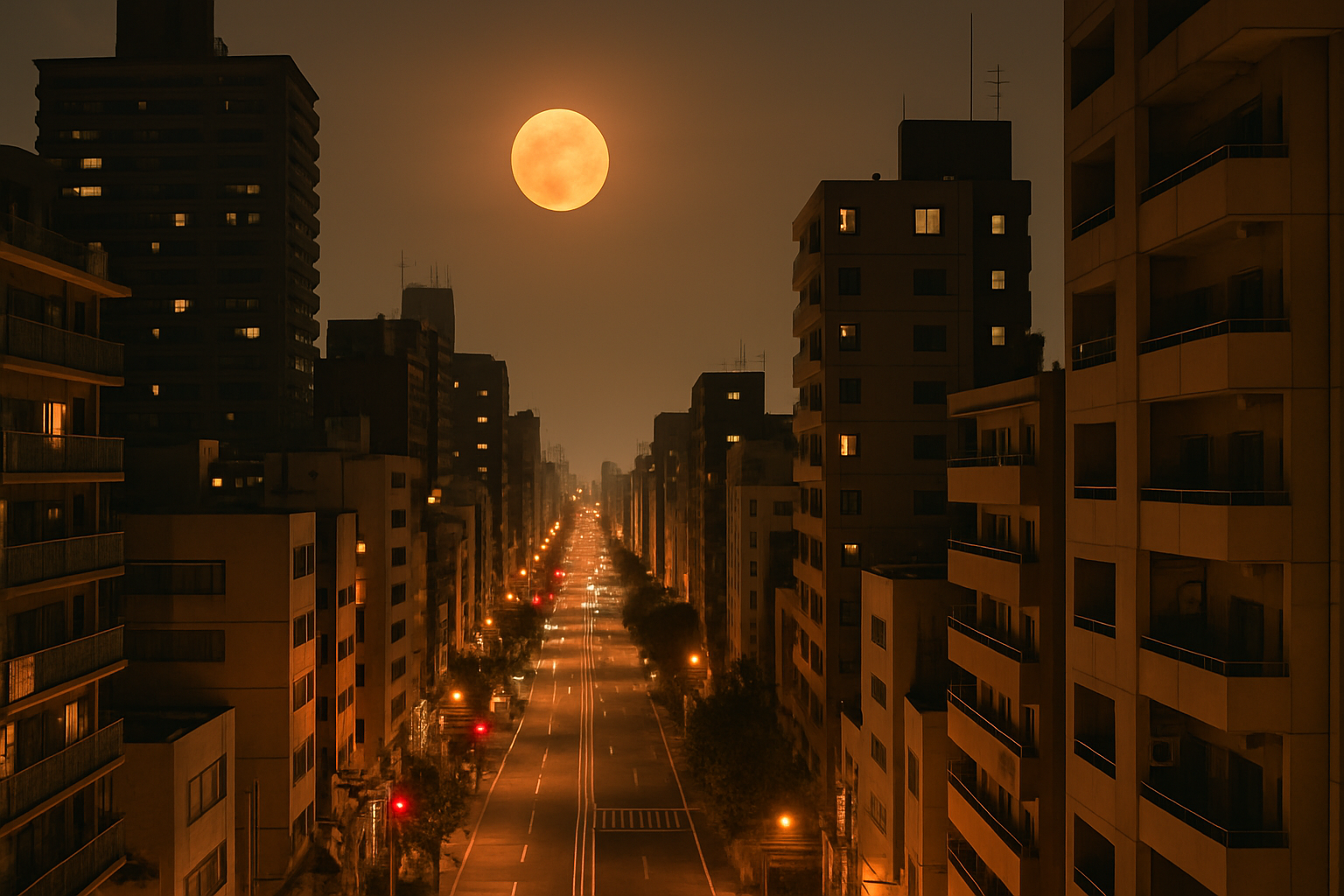
I feel like there are more and more “restless nights”…
The heat doesn’t let up even at night, making it hard to fall asleep.
Do any of these “restless nights” sound familiar to you?
Lately, I’ve been hearing people say, “Tropical nights are on the rise.”
In fact, this trend is clearly evident in data from the Japan Meteorological Agency.
using Osaka as an example, I’ll explain how the percentage of tropical nights has changed over time, accompanied by visualizations.
What Is a “Tropical Night”? Definition and Basics
A “tropical night” refers to a night when the nighttime low temperature reaches 25°C or higher.
Specifically, if the lowest temperature from the previous evening to the following morning is 25°C or higher, that day is counted as a tropical night.
It’s important to note that this isn’t just about “heat during the day,” but also about the fact that “the coolness of the night is being lost.”
[Data Comparison] Trends in Tropical Nights in Osaka (2020–2024)
Here, we’ll compare the “frequency of tropical nights in July” over the past five years.
- 2020: 11 days (approx. 35%)
- 2021: 13 days (approx. 42%)
- 2022: 15 days (approx. 48%)
- 2023: 18 days (approx. 58%)
- 2024: 21 days (approx. 68%)
Calculated based on 31 days in July for each year
👉 The percentage of tropical nights has been steadily increasing year by year.
Why Are Tropical Nights Increasing?
The following factors are thought to be behind the increase in tropical nights:
-
The urban heat island effect
→ Heat accumulated in asphalt and buildings is released at night, making it difficult for urban areas to cool down -
Progressing global warming
→ The rise in annual average temperatures is affecting nighttime conditions as well -
Dense housing and reduced airflow
→ Natural heat dissipation and airflow are hindered, creating an environment where heat easily builds up
Health Risks Associated with Tropical Nights
If your body temperature does not drop at night, the quality of your sleep will decline.
Lack of sleep can lead to the following problems:
- Impaired judgment and lack of concentration
- Increased risk of heat exhaustion (fatigue that does not subside and accumulates)
- Mental imbalance (irritability, depressive tendencies)
“Tropical Night” Countermeasures You Can Start Today
- ✅ Use a fan and air conditioner together (to circulate air)
- ✅ Take a shower or a foot bath before bed (Lower your body temperature before getting into bed)
- ✅ Use cooling bedding and ice packs
- ✅ Leave a window slightly open to create a breeze (be mindful of security)
In Closing | “The Heat” Creeps Up on You at Night, Too
We tend to focus only on the daytime heat.
However, it is precisely during “sleep”—a time when we are most vulnerable—that the effects of temperature are most pronounced.
The feeling that “nights have gotten hotter” isn’t just your imagination.
We hope this serves as an opportunity to reevaluate your lifestyle, based on both your personal experience and the data.