
What Is GPT-5.4? A Beginner’s Guide to the Differences Between GPT-5.4 and GPT-5.3 | A Comprehensive Overview of Performance, Use Cases, and How to Choose
A beginner-friendly guide to the differences between GPT-5.4 and GPT-5.3. We’ll provide a detailed explanation based on official information, covering speed, reasoning ability, use cases, and how to use them based on your plan.
5 min read
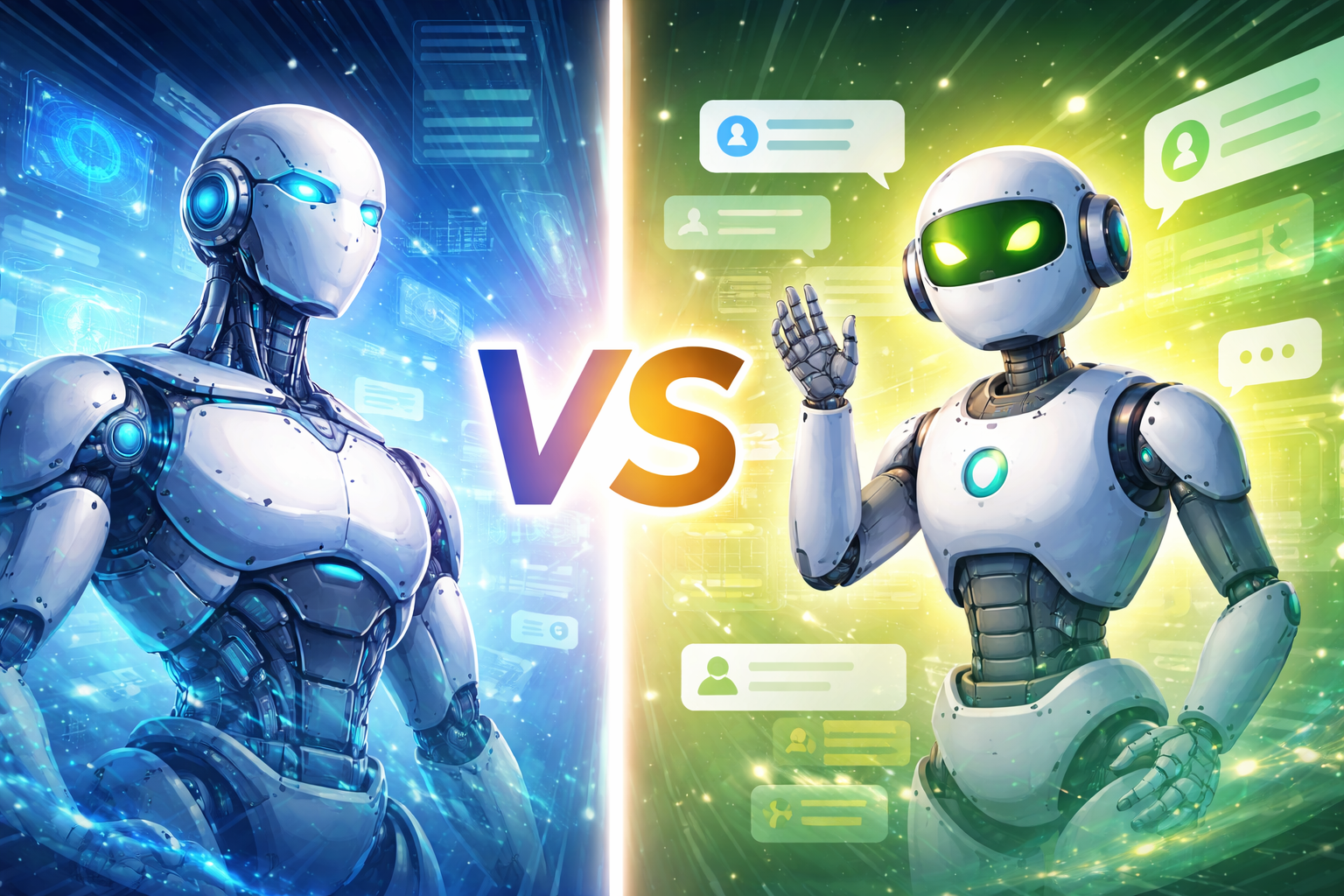
Many of you are probably wondering, “What is GPT-5.4? How is it different from GPT-5.3?” Because the names are similar, it might seem like “just the latest version,” but in reality, they are designed as models with different roles. To put it simply, GPT-5.3 is best suited for everyday questions and light tasks, while GPT-5.4 is better for complex reasoning and writing long texts. This guide breaks it down based on OpenAI’s official announcements, help documentation, and release notes so that even beginners can understand it clearly.
What Is GPT-5.4?
GPT-5.4 is an inference-enhanced model released in March 2026, available in ChatGPT as “Thinking” or “Pro.” According to the official description, it is a model designed to prioritize handling long workflows, complex reasoning, and specialized tasks.
Features of GPT-5.4
- Can think through difficult problems for extended periods
- Easily retains instructions with many conditions
- Produces high-quality outputs such as documents, tables, and materials
- Excels at coding and analytical tasks
- Supports tasks that rely on tool integration
The main advantage is that it “easily produces high-quality results.”
The downside is that it’s “a bit slow for simple questions.”
Please note that it is not freely available across all plans.
In practice, when generating long-form compositions or comparative articles, it gives the impression that consistency is maintained throughout the process. This is a difference that even beginners can easily notice.
What Is GPT-5.3?
GPT-5.3 is a model for everyday use that was updated in March 2026 and is provided as the core of the standard ChatGPT experience. According to the official description, it is the flagship model focused on fast, natural conversation and search assistance.
Features of GPT-5.3
- Fast response times
- Strong at handling everyday questions
- Explanations are natural and easy to read
- Improved accuracy for search-related questions
- Fewer unnecessary disclaimers
The main advantage is that it’s “easy to use.”
The downside is that “it’s somewhat weak at complex, structured tasks.”
It’s important to note that “Thinking”-series models are better suited for situations requiring deep reasoning.
For short summaries or rephrasing, GPT-5.3 often feels more comfortable to use.
The Biggest Difference Between GPT-5.4 and GPT-5.3
The biggest difference is whether the focus is on speed or reasoning.
Differences in Roles
- GPT-5.3: High speed, everyday use
- GPT-5.4: Reasoning, specialized use
- GPT-5.4 Pro: Most Challenging Tasks
The advantage is that it’s easy to choose based on your specific use case.
The downside is that it’s hard to tell the difference just by the names.
It’s important to note that the newest model isn’t always the best choice.
In practice, the most natural approach is to “start with 5.3, then use 5.4 if necessary.”
What Has Improved
GPT-5.4 has been specifically enhanced in the following areas.
Areas of Improvement
- Consistency in long-form text generation
- Multi-step reasoning
- Coding ability
- Spreadsheet tasks
- Presentation material creation
The main benefit is its ability to “handle complex requests all at once.”
The main drawback is that “processing may sometimes feel sluggish.”
It’s worth noting that the difference may be hard to discern with simple questions.
When creating structured articles, there seems to be fewer logical inconsistencies in the middle of the text.
Differences Beginners Can Easily Notice
The aspect where beginners notice the difference most is the “weight” of the query.
Examples Where the Difference Is Noticeable
- Summarization and translation → GPT-5.3
- Creating comparison articles → GPT-5.4
- Design and organization → GPT-5.4
- Casual conversation or web searches → GPT-5.3
The advantage is that it’s easy to determine which model to use for each task.
The disadvantage is that you need to be mindful of which model to select.
Please note that the automatic switching feature may sometimes activate.
When generating article structures, GPT-5.4 tends to produce more consistent results.
How to Choose Between Models in ChatGPT
For beginners, the following approach is the most efficient.
Basic Guidelines
- Use GPT-5.3 for everyday tasks
- Use GPT-5.4 Thinking for long texts
- Use GPT-5.4 Pro for advanced analysis
The advantage is that it’s simple to use.
The downside is that the model names can be confusing.
Please note that availability varies depending on your plan.
We recommend starting with the default settings and switching to “Thinking” only when necessary.
Which Is Better for Blog Post Creation?
For blogging, GPT-5.4 generally has the edge.
Reasons
- Excels at organizing structure
- High consistency in long texts
- Strong at comparative articles
- Stable at maintaining conditions
- Excels at organizing information
The advantage is that it improves the quality of the final output.
The disadvantage is that processing time increases.
Please note that you’ll need to verify primary sources separately.
For tasks like generating a large number of title ideas, GPT-5.3 is more efficient.
Summary
GPT-5.4 is a model that prioritizes reasoning ability and output quality, while GPT-5.3 is a high-speed model optimized for everyday use. For beginners, it’s most practical to start with GPT-5.3 and switch to GPT-5.4 when complex article writing or analysis becomes necessary.
Simply understanding “when to use each” rather than debating “which is better” will dramatically improve your experience with ChatGPT.
Primary source checked
Primary sources checked
Important claims should also link to the relevant source in the article body.