
AI and science projects? That’s what I wanted when I was a kid.
When I think of summer vacation, I remember the days I spent racking my brain over “summer research projects.” Days went by without settling on a topic, I strug
4 min read
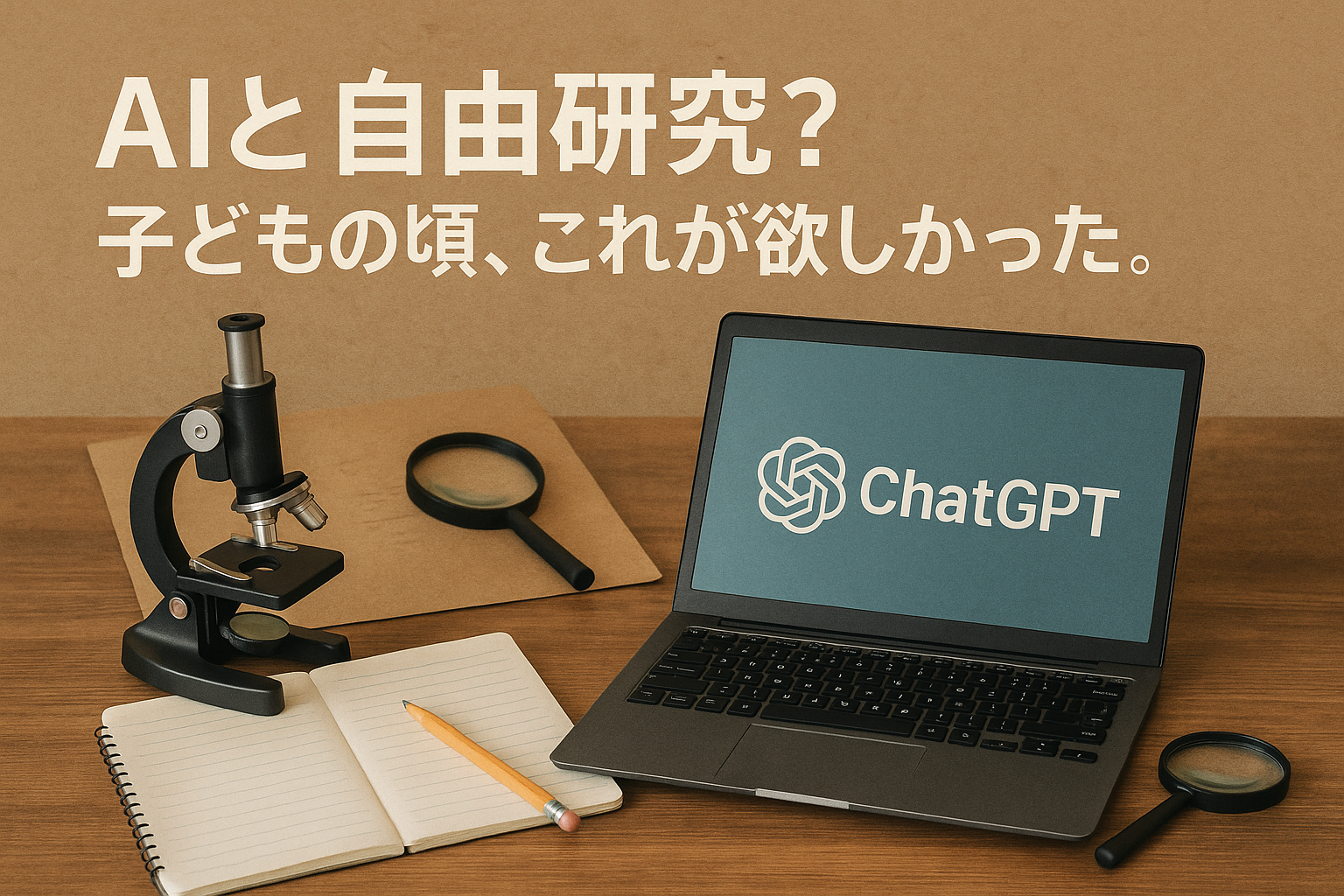
When I think of summer vacation, I remember the days I spent racking my brain over “summer research projects.”
Days went by without settling on a topic, I struggled with research, and I spent late nights staring at a sheet of poster paper—I’m sure many of you have had similar experiences.
But if I’d had an “AI partner” back then, how reassuring that would have been.
Is Using AI for Independent Research “Cheating”? Or Is It a Dream Partner?
AI tools like ChatGPT are gaining attention as useful resources for independent research—they can help you brainstorm topics, suggest experiment ideas, and even assist with structuring your writing.
Some people ask, “But isn’t that cheating…?”
But in reality, AI isn’t there to provide “answers”—it’s there to offer “hints for thinking.”
It’s a reliable “partner” that helps you research, think, and organize your work together.
What AI Can and Can’t Do
What it can do:
- Discussing themes and ideas (e.g., “Are there any nature observation themes for third graders?”)
- Assisting with research on necessary materials and experimental methods
- Helping organize observation data and create graphs (can also integrate with spreadsheet software)
- Providing advice on report structure (introduction, methods, results, conclusion, etc.)
- Suggesting captions and descriptions for figures
What It Can’t Do:
- Conduct actual observations or record data
- Write children’s own “insights” or “impressions” for them
In other words, AI is extremely useful as a tool that “draws out” children’s own learning and discoveries.
Examples of AI Use by Grade Level
Early Elementary School:
- Help with wording for observation journals on morning glories or insects
- Gentle support for students who “can’t quite put their thoughts into words”
Middle Elementary Grades:
- Verifying procedures for simple science experiments (e.g., the reaction between baking soda and vinegar)
- Support for research-based learning (e.g., constellations or types of clouds)
Upper Elementary Grades:
- Summarizing survey results (creating graphs and writing reports)
- Suggesting structures for community surveys and environmental reports
Independent Research in the AI Era Cultivates “Critical Thinking Skills”
Children are looking for hints on “how to make it work” rather than “ready-made answers.”
AI responds to this need by presenting options, assisting with wording, and teaching research methods.
It is by no means “cheating,” but rather a tool that sparks creativity.
Why not enjoy your independent research project this summer in a slightly futuristic way?
“AI × Independent Research”: Something Parents and Adults Should Definitely Try
In fact, the appeal of using AI for independent research projects is **not just a privilege for children. **
When parents and teachers try using it together, learning time becomes even more “interactive” and “fun.”
For example—
- For children who want to “take on a deeper topic than last year,” AI suggests past examples and new angles.
- For children who struggle with writing essays, an excellent approach is to “speak in conversational language first, then refine it.”
- When struggling with the layout of poster paper or balancing font sizes, asking the AI for “an easy-to-read way to organize the information” is another good idea.
The time parents and children spend together, trying things out and asking, “How should we use this?” or “I’d like to try this on my own,” may be the very “essence of learning” in this day and age.
In Closing: If Only This Had Existed Back Then…
I, too, remember worrying as a child, “Where should I even start with my independent research project…?”
I’d browse idea books at the bookstore, do research at the library, and end up feeling frustrated that I could only tackle topics within my immediate reach.
Thinking back on that, today’s children truly live in a fortunate era.
AI won’t solve everything—but—
as a powerful ally for “thinking for yourself and giving things a try,” it’s sure to help create summer memories that will stay with them forever.
Why not try borrowing a little help from AI for your independent research project?
“Making thinking fun”—that’s the shape of learning in the AI era.