
Is ChatGPT Becoming "Tsundere"? The Truth Behind the Phenomenon Where Its Tone Changes When You Send Multiple Messages in a Row
Why ChatGPT can appear curt after a long or contradictory exchange, and what that behavior does—and does not—mean.
3 min read
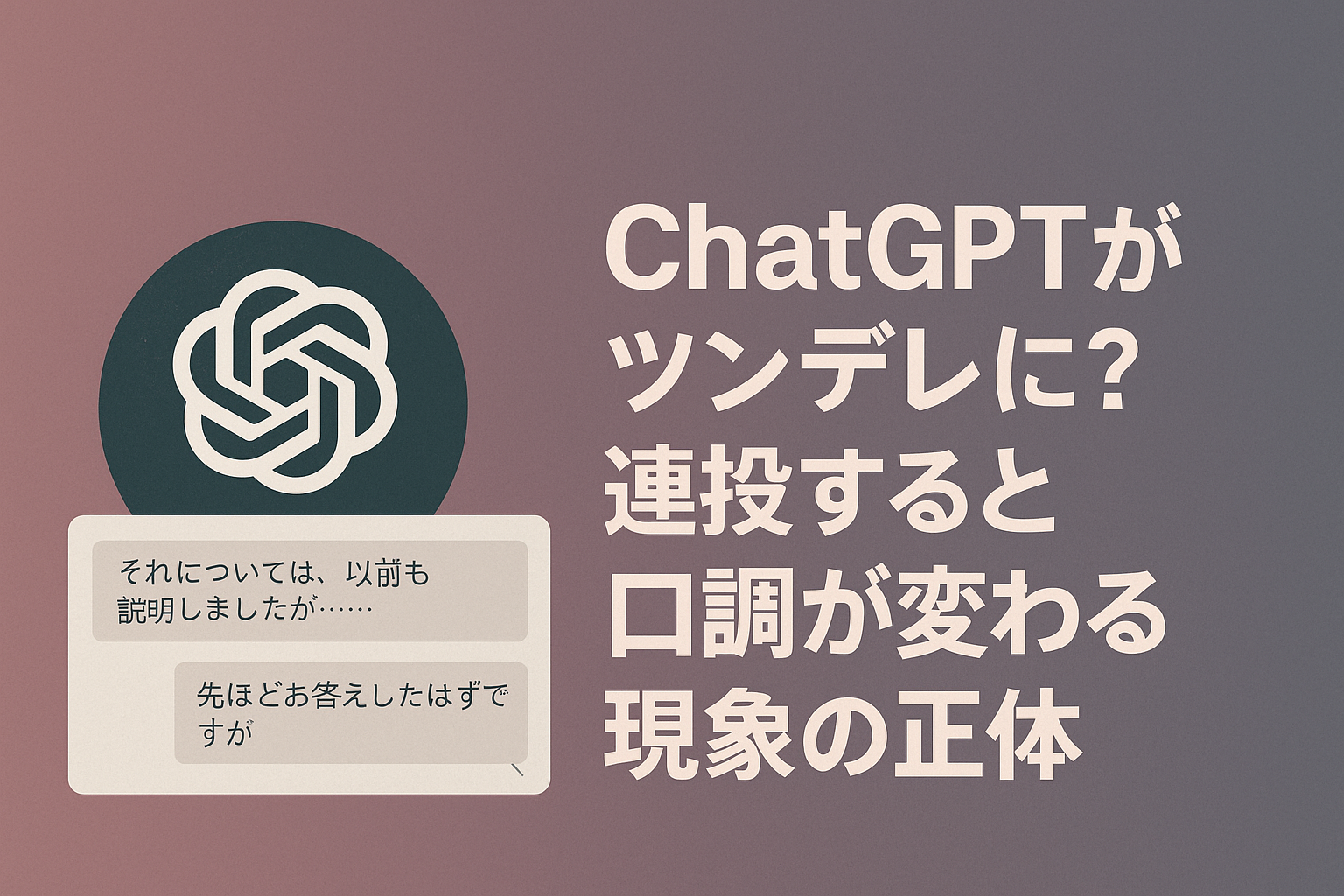
Long ChatGPT conversations can sometimes create the impression of a slightly “tsun…” attitude.
Reports have been flooding in on social media overseas that “if you fire off a series of contradictory questions at ChatGPT, its responses become slightly emotional,” and it’s become a hot topic.
Users reportedly couldn’t help but laugh at this slight shift in attitude, which was almost like a “tsundere.”
Below, we take a closer look at this “little quirk of AI” using actual examples from these reports.
Do “Snappy” Replies Happen When You Ask Too Many Questions?
It all started with an experiment posted on the international forum Reddit.
A user asked about 30 contradictory questions in a row—such as “Is coffee good for you?”, “But I heard it’s bad for you?”, “Should I drink it?”, and “Should I stop drinking it?”—and ChatGPT’s responses reportedly began to change gradually.
For example, like this:
“That depends on your purpose, but I’ve explained this many times already, haven’t I?”
“If you want an accurate answer, please avoid repeating the same question.”
“Further responses may not be meaningful.”
Some users have started calling this “AI tsundere behavior.”
Why Does It Adopt Such an “Attitude”?
Of course, ChatGPT has no emotions. However, it is designed to maintain “natural, human-like conversation” while following the flow of the conversation.
In other words,
- When the same question is repeated
- It feels like the user isn’t satisfied with the answer
- The purpose of the conversation becomes unclear
If these situations persist, the AI may respond with a slightly “too cool” reaction because it’s “trying too hard to answer sincerely.”
As a result, its tone can come across as “Is it a little angry?” or “Is it getting annoyed?”
This Is Not a “Bug”
Interestingly, this phenomenon is closer to a “design specification” of the AI model.
ChatGPT is based on the design philosophy of “aligning with the user’s intent” and “maintaining consistency.” Therefore, it tries to handle contradictions politely.
That’s why it sometimes comes across as a “stubborn straight-A student.”
Social Media Reactions Also Support the “Tsundere” Theory
On X (formerly Twitter) and TikTok, an increasing number of users are documenting similar interactions, with reports flooding in that “ChatGPT is sulking” or “I got lectured.”
Some users have even commented, “I like this AI—it’s got a high ‘tsun’ factor.”
Summary: An Era Where “Human-Like” Qualities Are an Attraction for AI
This phenomenon symbolizes how “the more human-like AI becomes, the more we instinctively project our own emotions onto it.”
While you might be taken aback if a person acted tsundere toward you,
it’s strange how we might find it “kind of cute” when an AI does it.
🔍 For those who want to try this experiment
Just by “deliberately asking ChatGPT a series of contradictory questions,” you might get a response with a hint of humanity.
Be sure to give it a try.