
The Future of AI and Culture: Where Is Human Creativity Headed?
Introduction In recent years, “AI cultural experiences” have begun to blend naturally into our daily lives. AI-generated music recommended on Spotify, AI art se
3 min read
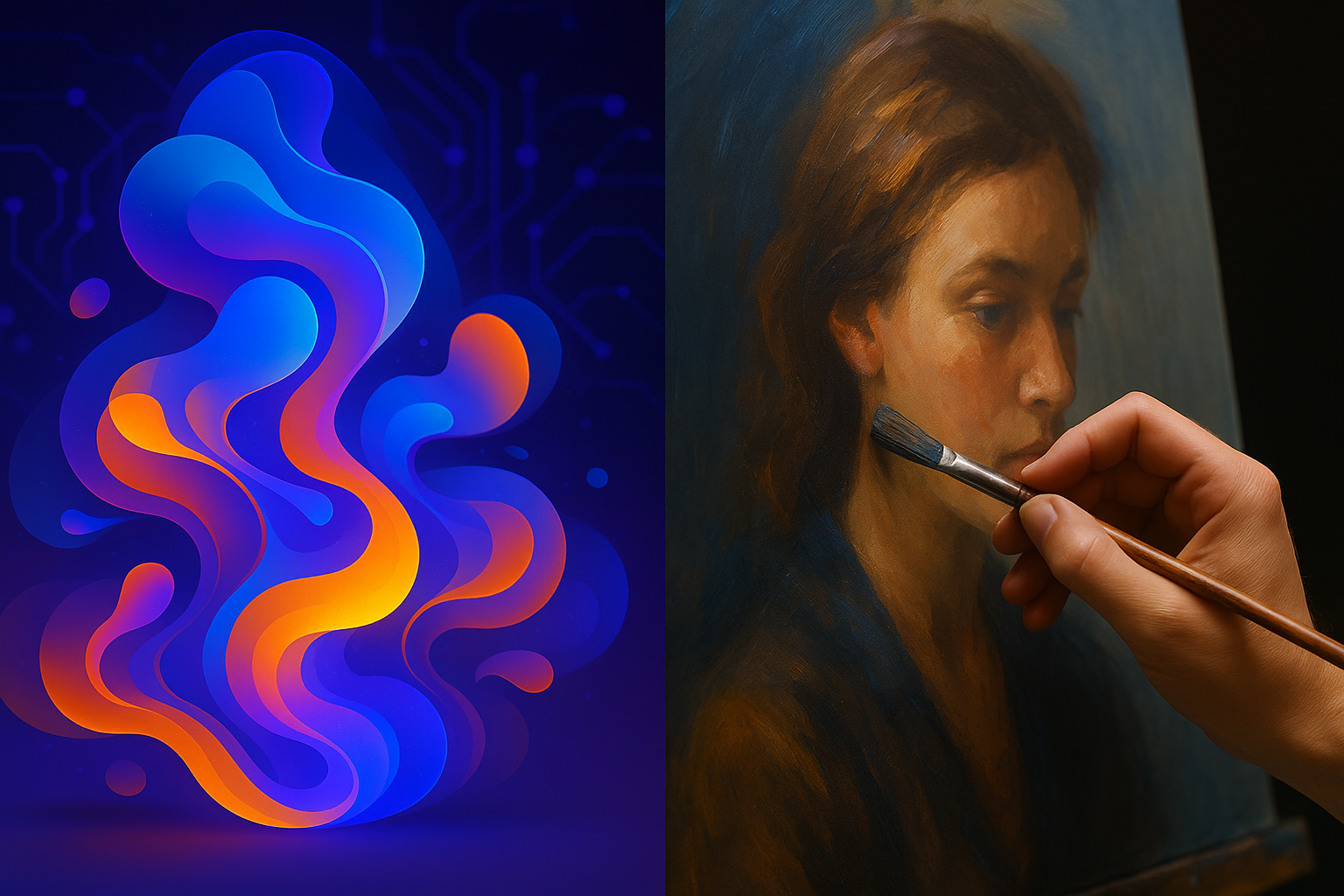
Introduction
In recent years, “AI cultural experiences” have begun to blend naturally into our daily lives.
AI-generated music recommended on Spotify, AI art seen on social media, and podcasts created by conversational AI like ChatGPT.
While these are convenient and refreshing, they also raise the question: “What will become of human creativity?”
This guide explores:
- How AI is beginning to engage with culture
- What the essence of human creativity is
- Tips for preserving our humanity in an AI-driven world
“New Cultural Experiences” Brought by AI
AI is already significantly transforming our cultural activities.
- AI Music: Songs composed by algorithms are appearing on streaming platforms, giving rise to “endless playlists” tailored to moods and situations.
- AI Art: Thanks to generative AI like DALL·E and Stable Diffusion, we’ve entered an era where anyone can create artwork in seconds. Its adoption is growing in art museums and the advertising industry.
- AI Podcasts: Through voice synthesis and automatic editing, AI supports everything from scriptwriting to distribution. The barrier to entry for individuals to become media creators has dropped dramatically.
These developments are groundbreaking in terms of “broadening the reach” of culture. However, they also raise a new question: “Is the creator’s originality really necessary?”
What Is Human Creativity?
So, what value does human creativity hold in the age of AI?
- Serendipity and Imperfection: Humans generate new ideas from failures and misunderstandings. AI, on the other hand, tends to produce efficient, optimized answers.
- Sharing Emotions: Human expression is imbued with the context of experiences and emotions. This is an aspect that AI can mimic but cannot truly “feel.”
- Dialogue with Society: Creative work is built on the premise of “relationships with audiences and peers.” What AI produces on its own is fundamentally different in that it lacks these relationships.
Collaboration with AI is most effective when humans use it as a “tool to broaden their thinking.” However, if we lose sight of the boundary between humans and AI, culture risks becoming homogenized and devoid of emotion.
“Selecting” and “Adjusting” AI-Generated Content Is Also Creativity
Rather than using AI-generated works as-is, comparing multiple candidates side by side and choosing the one that resonates most with you, or fine-tuning the details—originality lies in these actions themselves.
- Selecting the piece that feels “closest to my current mood” from 10 pieces of art generated by AI
- Arranging a melody composed by AI by layering your own voice or instruments over it
- Finishing a draft of text generated by AI by incorporating your own experiences and emotions
In this way, new value is created when AI provides the “raw material” and humans engage in selection, editing, and interpretation.
In other words, AI is an “infinite drafting machine,” and it’s up to humans to decide which direction to steer the process.
It is precisely this accumulation of choices and adjustments that can be described as the uniquely human form of creation in the AI era.
Summary: Tips for Preserving Humanity
As AI expands our culture, what should we keep in mind?
- Treat AI as a tool: Treat AI not as a “substitute creator” but as a “partner in thought.”
- Prioritize experience: Rather than merely consuming music and art, value the experience of performing and creating them yourself.
- Create spaces to share emotions: Nurture culture through interactions with others, whether online or offline.
It is inevitable that AI will become part of our culture. That is precisely why consciously cherishing “the imperfections, serendipity, and emotions unique to humans” may be the key to preserving the humanity of culture in the coming era.
👉 Recommended related articles: