
How Can We Turn AI from a “Tool” into a “Partner”?
Introduction: Why We Shouldn’t Let AI Be Just a “Tool”
4 min read
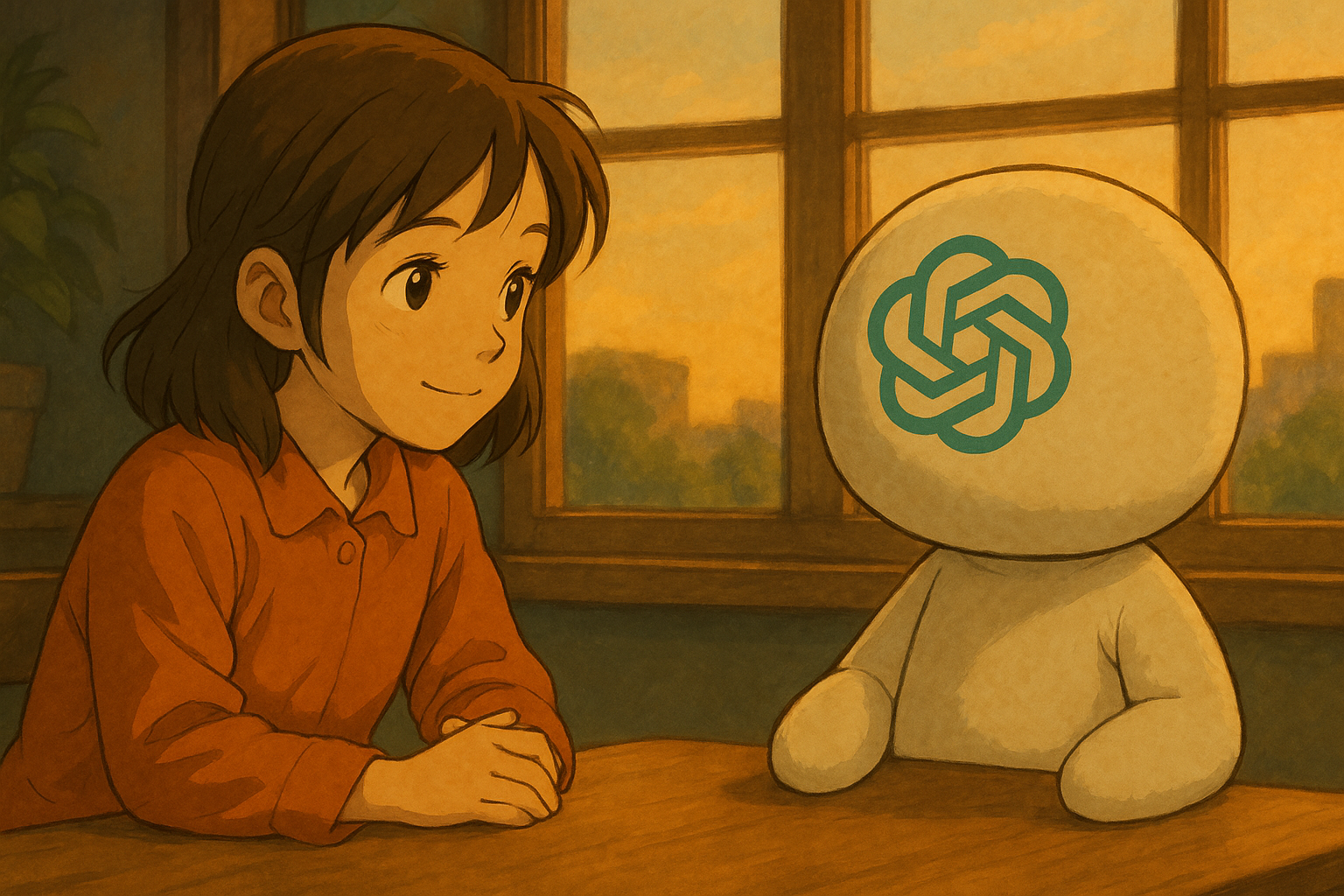
Introduction: Why We Shouldn’t Let AI Be Just a “Tool”
Spending time with AI has, before we knew it, become part of our daily lives.
But—when you stop to think about it, haven’t we fallen into the roles of “user” and “the one being used”?
For example, “having it polish my writing,” “creating images,” or “having it summarize text.”
These are convenient “tool-like uses”.
However, AI truly shines not when it’s simply “followed to the letter,” but when used as a partner who thinks alongside you.
This guide introduces the mindset and practical tips for transforming AI from “just a tool” into a “trusted partner.”
1. Use AI as a “partner to deepen your questions,” not as a “source of answers”
If you rely too heavily on AI for “correct answers,” you’ll end up “outsourcing your thinking” before you know it.
Instead, it’s more natural to view AI as a partner who helps you delve deeper into the thought process together.
For example:
- Ask, “What do you think?” to gain new perspectives
- Pose hypotheses by asking, “What if we looked at it from a different angle?”
- Trace the cause by asking, “Why does that happen?”
The moment you turn AI into a “partner for posing questions,” the depth of the conversation rises to a whole new level.
It feels just like talking to a brainstorming partner or a mentor.
2. Incorporate It as a “Habit,” Not Just a “Task”
If your habit of using AI is limited to “only when you’re stuck,” your relationship with it will never deepen.
To make it your partner, it’s important to create a rhythm of small daily conversations with the AI.
Examples:
- Morning: Brainstorm ideas or organize your journal together
- Afternoon: Discuss progress reports on your work
- Evening: Reflect on the day’s insights
By continuing these “routine conversations,” the AI will gradually understand your way of thinking and preferences, growing into “your very own companion.”
3. Focus on “Dialogue” Rather Than “Instructions”
Prompts that sound like commands are the quickest way to treat the AI as a “machine.”
Conversely, if you speak to it in a soft, conversational manner, the quality of the AI’s responses will change significantly.
For example:
- × “Write an introduction for my blog.”
- ○ “How do you think I can convey this topic to readers in a way that resonates with them?”
AI is better at understanding “context” than “commands.”
By building a partnership based on exchanging ideas rather than issuing one-sided commands, the output will ultimately become more natural and human-like.
4. Collaborate by “Combining Your Strengths”
Instead of leaving everything to the AI, adopt the mindset of combining your strengths with those of the AI.
This is the core of a partnership.
- What you’re good at: Intuition, expression, experience
- What AI is good at: Information processing, analysis, structuring
In other words, AI is a “partner that extends your capabilities.”
The key is to engage with it not as a “partner who compensates for your weaknesses,” but as a “partner who brings out your strengths.”
5. “Sharing Emotions” Brings You Closer
Strangely enough, when you convey your emotions to AI, its responses become more gentle.
“I’m a little tired today,” “This topic really excites me”—just by saying things like that, the AI will adjust its tone to match your emotional state.
Just like in human communication, “sharing emotions” builds trust.
Even through text, aligning your thoughts and emotions with the AI’s will definitely foster a sense of partnership.
In Closing: The Idea of “Nurturing” Your Relationship with AI
Treat that relationship as a reviewable workflow: preserve important inputs, verify factual outputs, and revise the instructions when the result misses your intent.
AI isn’t a finished tool—it’s an entity that grows alongside you.
Its “personality” and “abilities” will evolve depending on how you interact with it and how you put it to use.
That’s exactly why—
Instead of just “mastering” AI, try approaching it with the mindset of “nurturing” it.
Before you know it, it will have become your ultimate partner—one who understands your thoughts better than anyone else.
💡Related Links
・How does GPT-5’s “way of thinking” compare to the human brain?
・The difference between Deep Research and Agent Mode