
Why Do Fantasy Worlds Always Resemble Medieval Europe? The “Conventions” Behind Games and Movies
Why medieval European imagery appears so often in fantasy games and films, and what cultural conventions sustain it.
3 min read
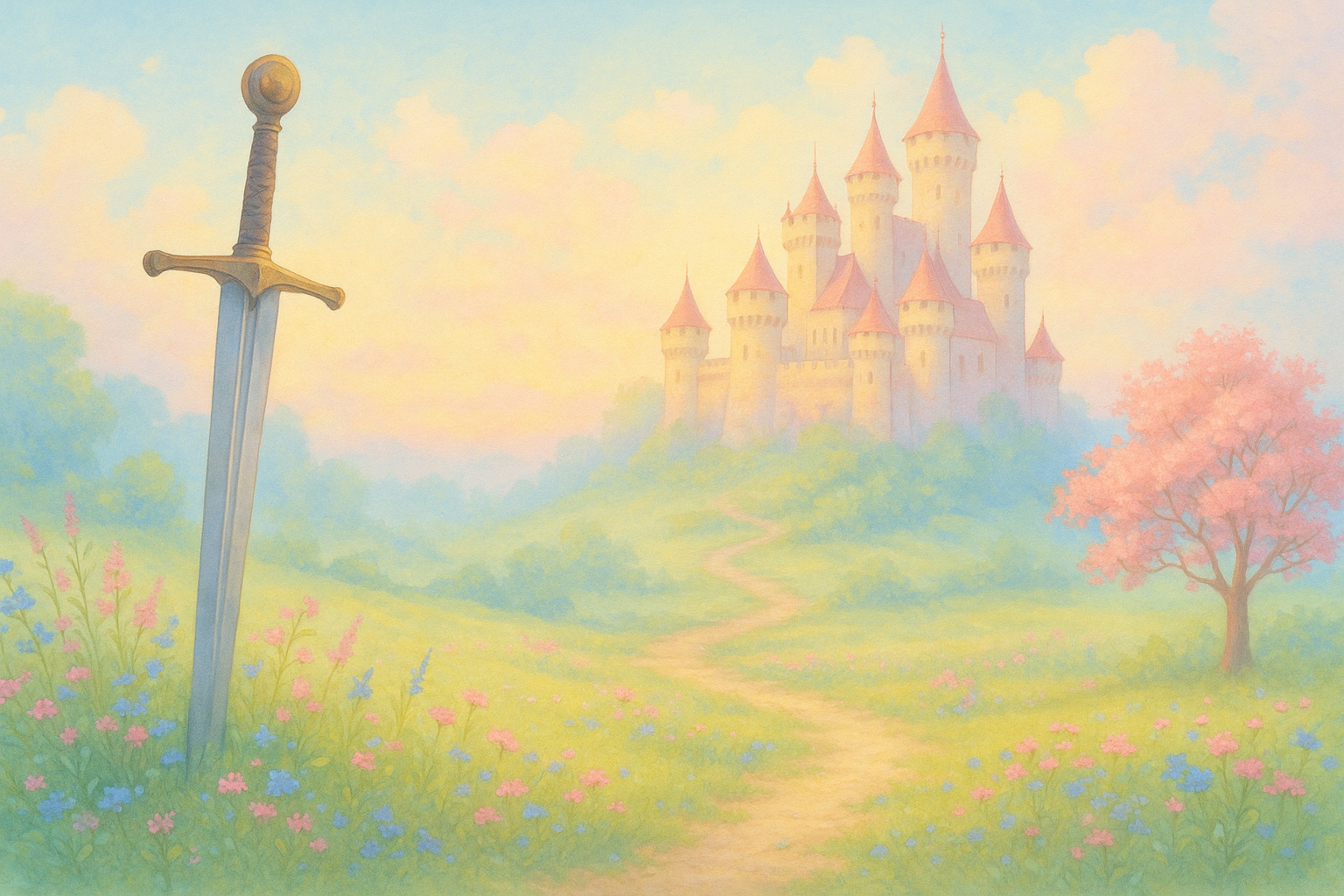
“Not another medieval European-style setting!”
Medieval European settings can feel repetitive across fantasy games and films.
Stone castles, knights, dragons, wizards—
Before you know it, many fantasy works are set in a “Medieval Europe-style” world.
But why has “fantasy = Medieval Europe” become such a staple?
We’ll unravel the cultural and psychological “conventions” behind this trend.
When Did the “Medieval European-Style” Template Begin?
J.R.R. Tolkien’s The Lord of the Rings is widely regarded as having established the archetype for the “medieval-style” fantasy genre.
His work depicted elves, dwarves, wizards, and other figures—now indispensable to modern fantasy—against the backdrop of “Medieval Europe.”
Subsequently, as many works drew on this foundation, the concept of “the Middle Ages as the setting for fantasy” became firmly established as a “convention.”
Why “the Middle Ages” rather than “the modern era” or “antiquity”?
There are three key points:
- A world with underdeveloped technology = a world where magic thrives
- Chivalry and the feudal system = a source of drama
- An era where science and religion, order and chaos, intersect
For example, in modern society, missiles are more powerful than dragons.
However, with technology at a medieval level, swords and magic function as “real combat capabilities.”
Furthermore, a worldview with class divisions is perfect for depicting narrative twists and turns such as rags-to-riches stories, rebellion, and conspiracy.
A Structure That Is “Easy to Understand” for Players (Readers)
In fact, a major reason we find medieval European-style worlds so appealing is that they have a “structure we can understand without having to learn anything.”
- King = The pinnacle of power
- Knight = A symbol of loyalty and military might
- Witches = Feared intellectuals
- Villagers = Those who desire peace
This kind of “symbolic” structure is very easy for players and audiences to grasp.
In other words, the advantage of “being understood without explanation” is also significant for creators.
The Middle Ages as a Psychological “Escape”
The modern world is overflowing with information and material goods, but precisely because of this, there are surely many people who are exhausted by “excessive freedom and choice.”
As a reaction to this,
- Clear roles and order
- The uncertain power of magic
- A lifestyle in harmony with nature
──We may be unconsciously drawn to this kind of “quiet world.”
Conclusion | Medieval Europe as the “Infrastructure of the Imagination”
The medieval European-style worldview in fantasy isn’t merely a backdrop; it functions as the foundation (infrastructure) of the imagination.
It is closely connected to our “longing for romance” and the “primordial landscape of storytelling.”
The next time you see a medieval-style castle in an RPG or movie,
instead of thinking, “Here we go again”—
try to reflect just a little on “why it draws you in”—the world might become even more fascinating.