
The Psychological Reasons We See Medieval Europe as an “Ideal World”
Why fictional medieval Europe can look like an ideal world even though historical life was far harsher.
3 min read
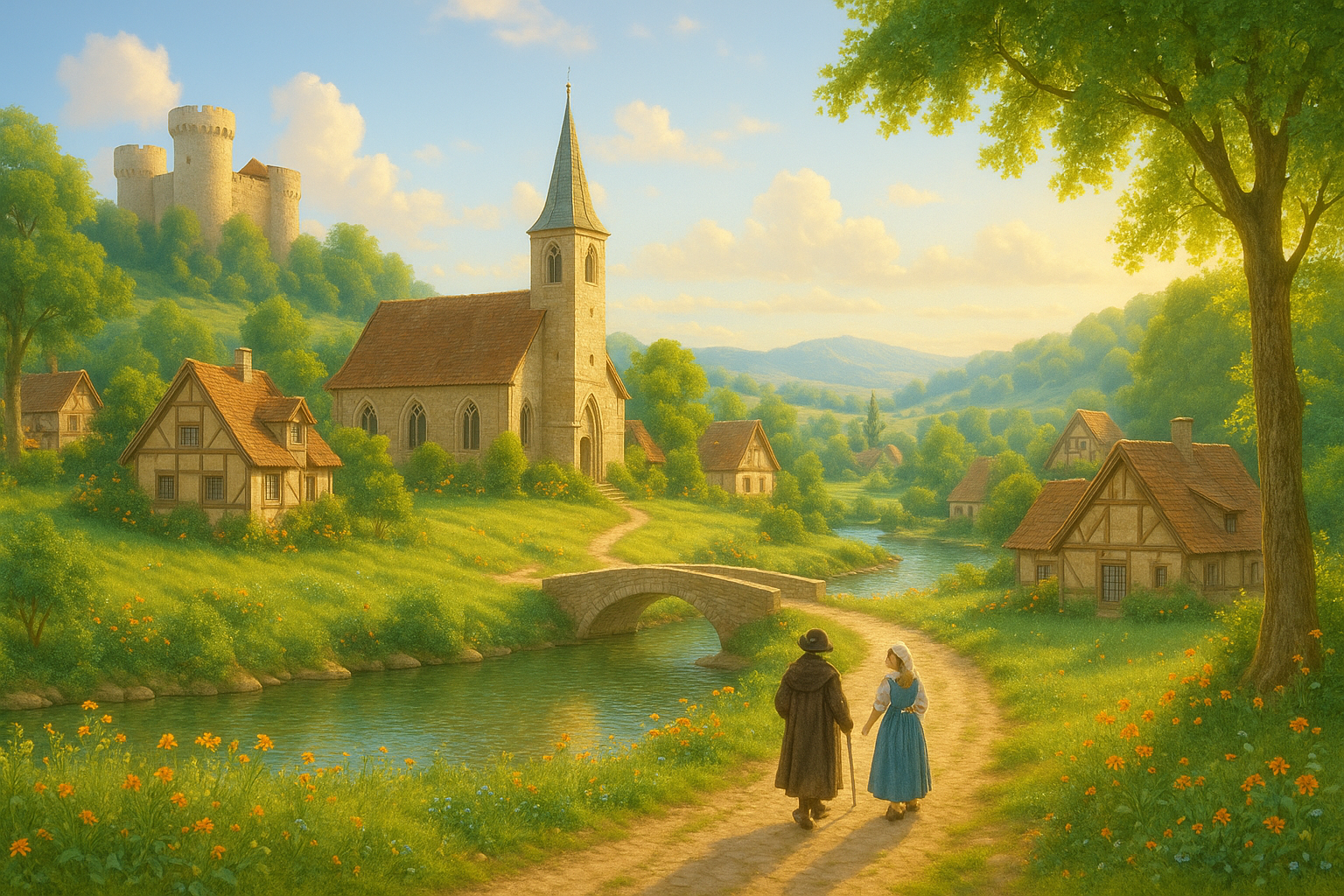
“I might want to live here…”
Medieval European settings can still create the impression of a place worth living in.
Of course, the real Middle Ages were by no means a utopia; they were marked by disease, war, and discrimination.
Yet, for some reason, we tend to superimpose the image of an “ideal world (utopia)” onto that era—
This guide explores the psychological reasons behind that “illusion”.
1|Why Do We Project Our Ideals onto the “Past World”?
People tend to “fill in the gaps” with their imagination when faced with an “unknown world.”
In psychology, this is called “cognitive completion.”
- Knowledge is vague → We fill in the gaps with imagination
- We don’t see the unpleasant aspects of reality → They are romanticized
In other words, the medieval world, with its scarcity of information compared to today, serves as a canvas onto which we can easily project our own “ideals.”
2|A World with “Order” Brings a Sense of Security
While modern society offers freedom and a wealth of choices, it is also a society where people are prone to stress stemming from “indecision” and “instability.”
In contrast, the medieval world was—
- Roles were clearly defined (peasants, knights, monks, etc.)
- People lived in villages and communities
- There were spiritual guidelines provided by God and religion
Psychologically, these elements are considered to create a “structured world”—a world that is predictable and provides a sense of security.
3|The Intertwining of “Nostalgia” and “Utopia”
The emotions that draw us to medieval Europe are not merely historical romanticism; they are closer to nostalgia.
Moreover, this is not
a memory of something actually experienced—
but rather an “ideal that resembles a memory,” based on the thought, “I wish it were like this.”
This sensation, also known as a “nostalgic utopia,” creates a fantasy where the past and ideals blend together.
4|Longing for “Life in Harmony with Nature”
The psychology behind idealizing the Middle Ages also includes a “desire to return to nature.”
- Rooms lit by fire
- Villages with waterwheels and wells
- A life surrounded by earth and grass
Our instincts find comfort in a lifestyle that fully engages the five senses—something hard to come by in modern urban life.
In Conclusion|The Utopia Lies Not Outside, but “Within”
The reason we see a utopia in medieval Europe is
because we sense “something missing in the modern world” there.
However, this may not be merely a historical fact, but rather a mirror reflecting our own “inner longings”.
- Time that flows slowly
- A clear sense of belonging
- Connections with others
Our hearts, which yearn for these things, superimpose the “utopia” onto the fantasy of the Middle Ages—
that is the manifestation of the “psychological need for security” within us.