Review a development Mac setup: builds, memory, and updates
Investigate a slow development Mac with comparable builds, memory-pressure observations, and Docker settings. Check compatibility and preserve a recovery path.
2 min read
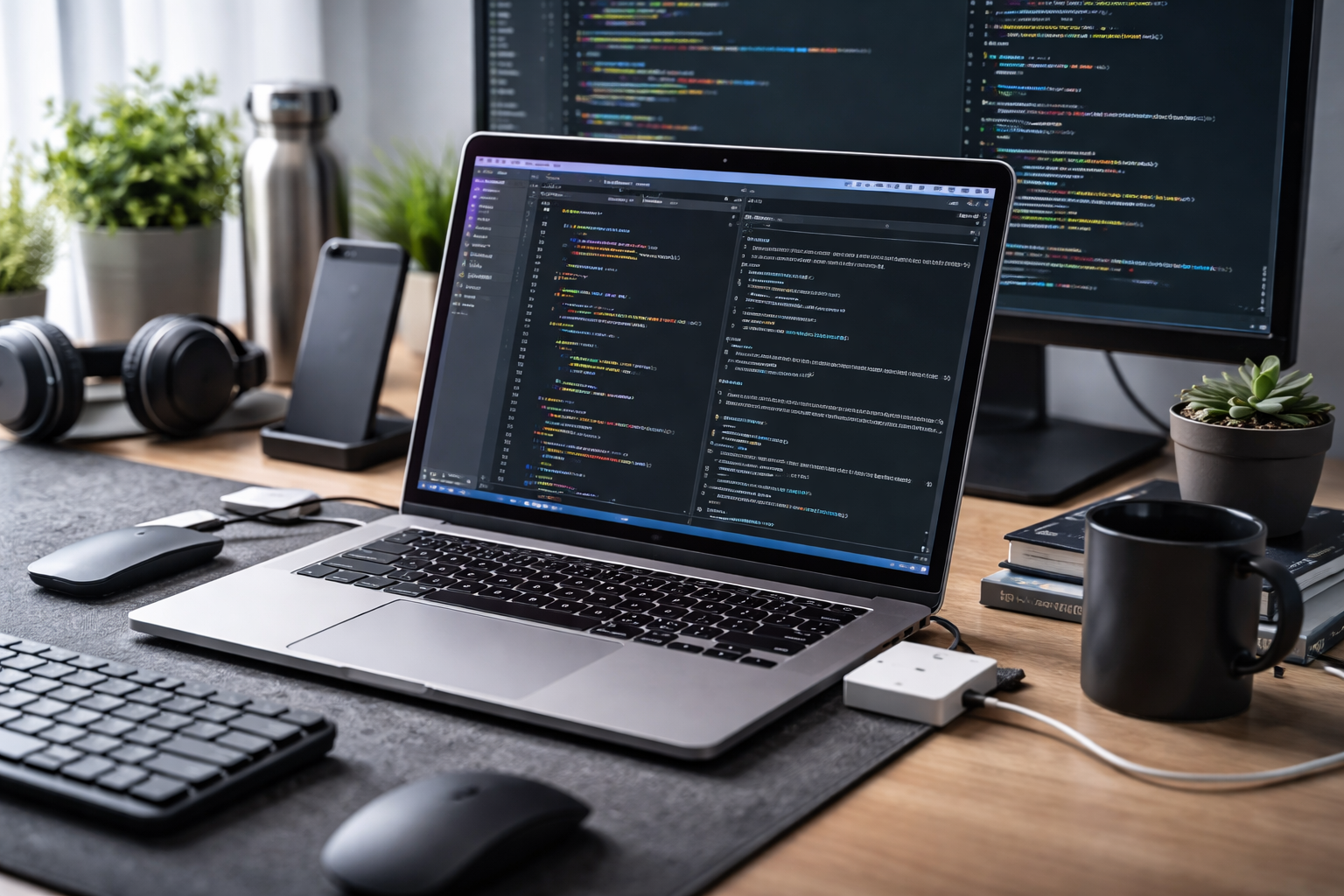
Review a development Mac around one failing or slow task, after checking SDK and application requirements. There is no universal Docker memory percentage or mandatory delay for every OS update.
Record one workload before changing settings
Record the model, memory, macOS, Xcode, Node, and Docker versions. Compare the same project, commit, and command. Do not mix a first build with a cached second build when assessing a setting.
| Symptom | Observe | First candidate change |
|---|---|---|
| Slow only during builds | CPU, logs, cold versus warm build | Unneeded parallel work |
| Meetings and development stall | Memory pressure and open apps | Close one unused app |
| Slow only with Docker | VM limits and active containers | Stop unused containers |
| Slow shell startup | Startup scripts | Disable one added plugin |
Do not judge memory by free capacity alone
Observe memory pressure during the symptom. Apple explains that it reflects swap and other factors as well as free memory.
Consult Docker's settings reference for your environment. Reducing an allocation until containers run out of memory is not an improvement. Record the previous value, build success, and response time; restore the value if the change breaks the workload.
Do not routinely delete caches or exclude search
Deleting DerivedData requires regeneration. Reserve it for diagnosing a specific build problem, with the target and recovery cost understood.
Excluding an entire development folder from Spotlight affects search. First establish whether indexing coincides with the CPU load, then consider the smallest useful exclusion. Restore it if it does not address the cause.
Check compatibility and recovery before updates
Use Apple's Xcode requirements. Do not apply a blanket one-to-two-week delay to important security fixes. Check backups and tool compatibility, then plan installation around the workload.
Prefer project-pinned versions and lockfiles. Update one tool at a time and repeat the same build and tests.
Decide when the setup is improved
The symptom should improve while builds, required synchronization, and backups still work. Keep a clear reversal path. Local-AI memory needs vary with the model and input; observed workloads are more useful than a blanket “developers need 32GB” rule.
Primary sources checked
Important claims should also link to the relevant source in the article body.
- Apple explainssupport.apple.com · official-documentation · Checked: 2026-09-05
- Docker's settings referencedocs.docker.com · official-documentation · Checked: 2026-09-05
- Apple's Xcode requirementsdeveloper.apple.com · official-documentation · Checked: 2026-09-05